
Echoes of the Times ।। 142 ।। No More Ten-Year Dreams — Britain Needs Solutions for Today’s Problems


Dedicated to:
The ordinary people of Britain who want to see real change in their lives today, rather than promises of a better tomorrow.
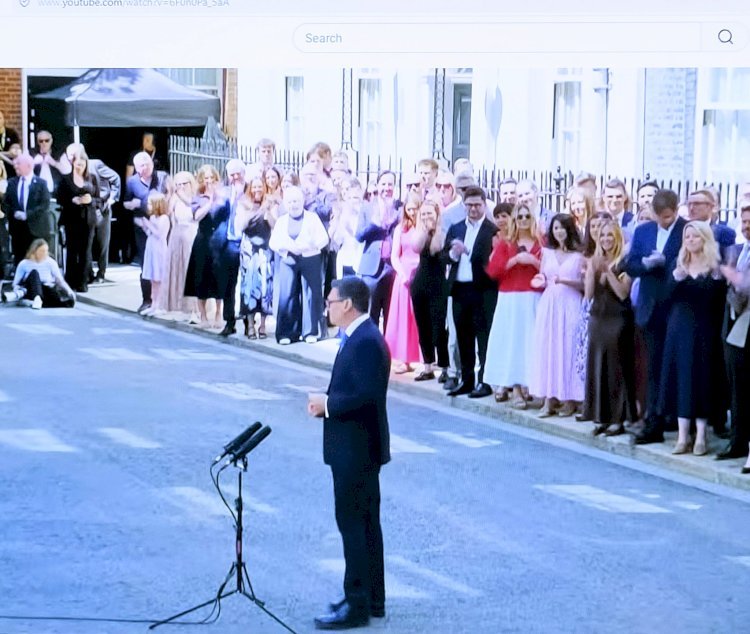
There is an old illness in the politics of the developed world: the tendency to paint beautiful pictures of the future while avoiding the difficult realities of the present.
Before every election, politicians often promise that “Britain will be transformed in ten years.” But for the person waiting today for hospital treatment, the young person searching today for employment, or the family struggling today with rising rents and living costs, a promise about ten years from now offers little comfort.
British politics is once again facing an old and fundamental question:
Do long-term plans truly change people’s lives, or are they sometimes used simply as a way of postponing action?
Andy Burnham, who has built a strong reputation as the Mayor of Greater Manchester, has emerged as a figure of hope in national politics. He speaks about change, reform and long-term national strategies.
But the British public is asking a difficult question:
Do we really need another ten-year plan, or do we need urgent solutions to today’s problems?
Because Britain’s reality is far more complicated than what appears on government documents.
The prison system is under severe pressure. There are concerns over overcrowding, delays in the justice system and the effectiveness of rehabilitation programmes. The industrial sector faces uncertainty. Young people need better employment opportunities, skills training and stronger mental health support. Meanwhile, long waiting times for cancer treatment within the National Health Service (NHS) have become a source of anxiety for many families.
These challenges are not new. Governments over the years have announced numerous strategies, commissions and ambitious plans. But the question remains:
How much has ordinary people’s daily lives actually improved?
The greatest weakness of politics is simple:
Announcing plans is easy. Delivering results is the real challenge.
When a government says, “We will fix everything over the next decade,” the immediate question from those suffering today is:
What happens to us now?
A cancer patient cannot wait ten years.
A jobless young person cannot wait ten years.
A small business cannot survive a decade of uncertainty.
A struggling family cannot live on promises while facing rising costs every day.
In politics, there is a familiar phrase: “Happiness will come tomorrow.” But for many people in Britain, that tomorrow has started to look like an unreachable horizon.
Over recent decades, different governments have announced ambitious goals. Some promised to transform healthcare. Others promised industrial revival. Some promised a new era of opportunity for young people.
But today, the public wants to know:
Where is the first step towards that change?
This is why Andy Burnham faces a significant test. Will he simply create another long-term roadmap, or will he take practical steps whose benefits people can see within months and years?
A successful politician does not only offer dreams of the future; they understand the struggles of the present.
Burnham’s experience leading local government in Manchester has brought him closer to ordinary people. He understands that the true test of policy does not take place inside government offices—it happens in people’s everyday lives.
Did a family’s energy bills become more affordable?
Did a patient receive treatment sooner?
Did a young person find a decent job?
These are the real measures of government success or failure.
In today’s world, public patience is running thin. In the age of social media, people can see problems and failures instantly. Therefore, governing through future promises alone is no longer enough.
Britain needs a new style of leadership—one that can hold ambitious visions for the future while also delivering immediate solutions to everyday problems.
Long-term planning may be necessary. Strategic thinking is essential for governing a nation.
But long-term plans must never become an excuse for ignoring the responsibilities of today.
A hungry person cannot be told that the food system will improve in ten years.
A sick person cannot be told that hospitals will be better in ten years.
A young unemployed person cannot be told that jobs will arrive in ten years.
Because politics exists for people—people do not exist for political plans.
This series, “Echoes of the Times,” carries a message of caution in every article:
Britain’s new leadership must understand that people no longer want to hear only stories about the future. They want to see change today, action today and results today.
Dream big, but make sure people can see the first light of those dreams now.
Otherwise, the phrase “a ten-year plan” may one day become another symbol of an unfulfilled political promise.
Author: Editor, Columnist, Analyst, Storyteller & Former Professor
London, 21 July 2026