Echoes of the Times || 85 || Iran Crisis: Survival, Retaliation, or Reconstruction?

Dedication
To the ordinary people of the Middle East—
those who bear the greatest cost in power struggles.
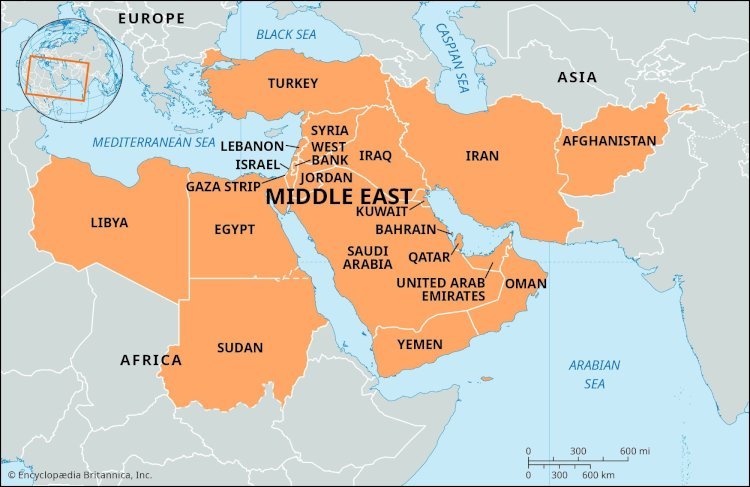
In Middle Eastern politics, we often see that starting a war is easy, ending it is difficult, but the most difficult task of all is managing the reality that follows. The new chapter that has begun around Iran after the recent coordinated US-Israeli strikes is not merely a military confrontation; it represents a profound struggle between state survival and state reconstruction.
Let us assume that Iran endures this war. Even then, the question remains: will the Islamic Republic remain the same? History tells us that after a major shock, regimes either collapse or transform. They do not remain unchanged.
The death of Iran’s Supreme Leader, Ali Khamenei, is not merely the absence of an individual; it marks the end of four decades of continuity in power. Since 1989, he was not only the head of state but also the symbol of an ideological framework. Removing such a symbol does not automatically halt the machinery of the state, but it does unsettle its internal balance.
This leads to the first question: what is Iran’s objective? Not victory, but survival. Tehran knows it cannot match the United States in conventional military power. Therefore, its strategy will likely focus on spreading the costs of conflict through drones, missiles, proxy pressure, and regional instability. This is a form of “asymmetric warfare,” where the balance of endurance matters more than the balance of force.
Donald Trump’s position, by contrast, is entirely different. He seeks to present this strike not as limited retaliation, but as a decisive chapter. His political narrative is clear: a long-standing adversary has been neutralized. Yet military success and strategic success are not the same. The critical question is: what comes next?
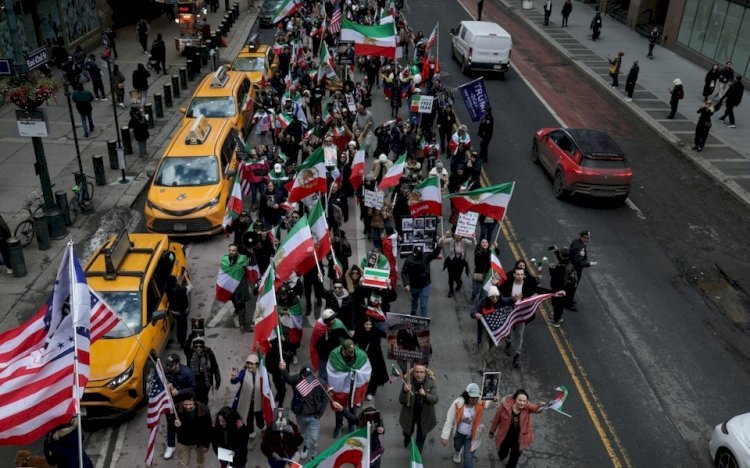
By hinting at regime change in Iran, Washington claims a kind of moral high ground—“let the Iranian people determine their own future.” But can a genuine internal popular movement emerge under external military pressure? History offers few clear examples, and the outcomes are often uncertain. In fact, outside attacks frequently inflame nationalist sentiment and temporarily strengthen the very regime they aim to weaken.
Israeli Prime Minister Benjamin Netanyahu’s objective is somewhat different. His primary concern is security—keeping Iran internally preoccupied and strategically weakened for a prolonged period. Even if there is no permanent collapse, sustained distraction and weakening would represent a strategic success for Israel.
Thus, the three actors in this conflict pursue different goals: Iran seeks to survive; the United States seeks a decisive outcome; Israel seeks long-term weakening. These objectives do not align along a single straight line. And therein lies the uncertainty.
In Khamenei’s absence, the question of power becomes especially sensitive. Constitutionally, there is a mechanism for succession. In practice, however, decisive influence will rest with the Revolutionary Guard and the security establishment. Will they form a collective leadership? Or will internal rivalries intensify? If fragmentation begins, external military pressure could accelerate it. Yet the same pressure could also reinforce internal unity. The outcome will depend on the internal understanding among the centers of power.
Another dimension must not be overlooked: the economy. Instability in the Gulf region means pressure on energy markets and risks to global trade routes. Even minor tension in the Strait of Hormuz could trigger significant rises in global oil prices. In other words, this conflict is not confined to Tehran, Tel Aviv, or Washington; its waves will reach London, Dhaka, and Toronto as well.
The most important question, therefore, is not military but political: what is the post-war roadmap? If Washington lacks a clear plan—who will govern Iran, how, and under what structure—then military success may turn into strategic emptiness. The experience of the Iraq war remains fresh in global political memory.
Iran, the land of one of the world’s oldest Persian civilizations, may well endure. After all, it has survived for more than four thousand years. Even Alexander and Hulagu Khan could not permanently subdue this land. But survival is not the same as remaining unchanged. If the Islamic Republic transforms—whether into a more security-centered state or gradually into a new political arrangement—the balance of power in the Middle East will also shift.
At this moment, only one thing can be said with certainty: the first blow of war is visible, but the silent reconstruction that follows is far deeper. Real politics begins after the guns fall silent. And it is that politics which will determine whether this was merely a military episode—or the beginning of a new era. Time alone will tell.
Author: Editor, Columnist, Analyst, and Former Professor
London, 1 March 2026