Major Study Reveals Housing Inequalities Faced by Bangladeshi Elders in London
“My Home, My Life” Launched at the House of Lords

Voice of People report, London, 12 February: A landmark research report titled “My Home, My Life”, exploring the housing realities of Bangladeshi elders in East London, was formally launched at the prestigious Cholmondeley Room of the House of Lords.
The event’s chief guest, Lord Best, OBE, DL, described the study as “highly necessary, well‑structured and sharply focused.” He emphasised that it is the kind of work that “civil servants and ministers should take very seriously,” adding that the findings have the potential to drive real and meaningful change.
Three‑Year Study with Major Institutional Partners
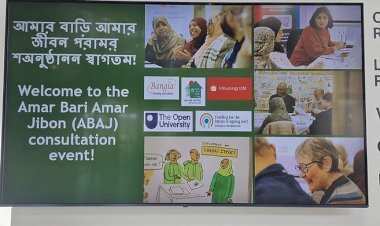
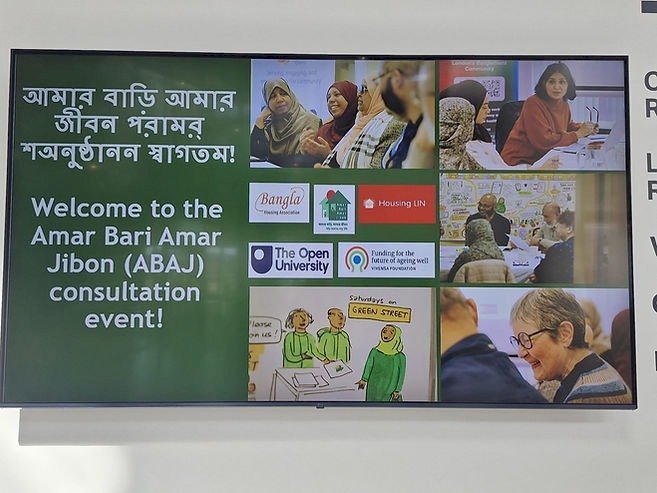
Commissioned by the Vivensa Foundation, the three‑year research project was conducted in partnership with:
- The Open University
- Bangla Housing Association
- Housing Learning and Improvement Network (Housing LIN)
Researchers conducted in‑depth interviews with 76 Bangladeshi men and women aged 50 and above living in Tower Hamlets, Newham, Hackney, and Redbridge.
Key Finding: A Lifetime of Inequality Intensifies in Old Age
The study reveals that long‑standing housing inequalities become even more pronounced in later life, deeply affecting:
- physical health
- mental wellbeing
- social care needs
- family relationships
- overall quality of life
Many participants were found to be living in homes that do not meet their age‑related physical limitations, chronic health conditions or mobility needs.
Damp, Poor Ventilation, Heating Problems—A Widespread Reality
Among those living in social housing and private rented accommodation, the research identified recurring issues such as:
- damp and mould
- inadequate ventilation
- persistent heating problems
These conditions increase the risk of respiratory illness, infections and mental distress, the report warns.
‘Functional Overcrowding’: Privacy and Cultural Practice Under Strain
Another major concern highlighted is functional overcrowding.
Although most housing is designed for nuclear families, many Bangladeshi households live in joint or multi‑generational structures. This leads to:
- lack of personal privacy
- family tensions
- barriers to religious and cultural practices
Such pressures significantly affect the well-being of older residents.
Slow Responses, Language Barriers and Administrative Hurdles
Many elders reported that when they seek help from councils or landlords, responses are often slow or inadequate.
Language barriers and bureaucratic complexity discourage many from pursuing applications altogether. As a result, they remain in unsafe or unsuitable housing, increasing health risks and placing additional care burdens on families.
Voices from the Research Team
Manik Gopinath, Senior Lecturer in Ageing at The Open University and the study’s lead researcher, said:
“For far too long, older Bangladeshis have remained invisible in ageing and housing research and policymaking. This study brings their voices to the centre, showing not only that inequalities exist, but how they are lived and experienced daily—often as the cumulative outcome of a lifetime of disadvantage.”
Bashir Uddin, CEO of Bangla Housing Association, added:
“Research becomes meaningful only when it leads to action. This is a clear call to action. Existing homes must be adapted to make them fit for living, and new developments must prioritise larger, family‑appropriate housing.”
Clear Recommendations for Policymakers
The report outlines several key recommendations for national and local authorities, including:
- regular collection of ethnicity‑ and age‑disaggregated housing data
- removal of discriminatory barriers to home adaptations for older people
- recognising multi‑generational living as a legitimate housing preference
- integrating housing with health and social care planning
The study warns that around 80% of the homes people will live in by 2050 already exist, making it urgent to improve the safety, accessibility and age‑friendliness of current housing stock.
Failure to act will deepen future inequalities in ethnicity, health and care.
Ultimately, “My Home, My Life” is more than a research report—it is a human document capturing the lived struggles of East London’s Bangladeshi elders.
Its message is clear and uncompromising:
Without appropriate housing, dignified and healthy ageing is not possible.