A serial column series by Siddiqur Rahman Nirjhor: Echoes of a Troubled Time
Echoes of a Troubled Time ।। 77 ।। Standing Alone at the Peak of Power: Is Starmer’s Leadership Crumbling?

Echoes of a Troubled Time ।। 77 ।।
।। By Siddiqur Rahman Nirjhor ।।
This column is dedicated to the quiet minds who understand the weight of politics.
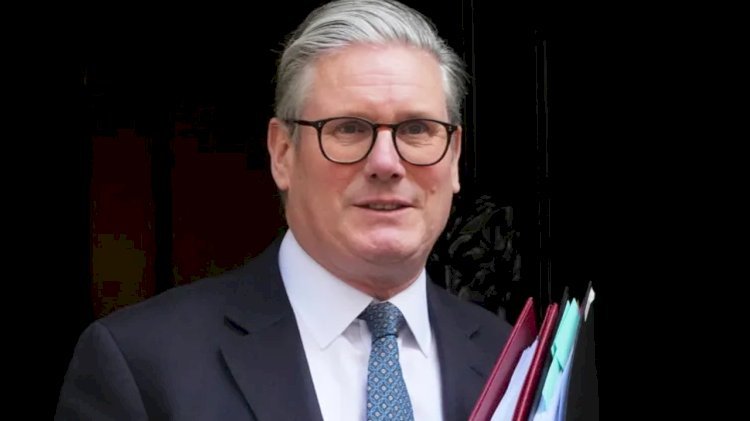
British Prime Minister Sir Keir Starmer
British politics today stands inside a strange kind of silence. Not a peaceful silence, not a comforting one — rather a heavy, compressed, deeply unsettling quiet. It is the kind of silence that speaks louder than noise. The political pressure building around Keir Starmer is no longer a matter of whispers or analysts’ speculation; it has become real, visible, and increasingly unbearable.
After the resignation of his closest aide, there is no longer any room to hide the fact that Starmer has become effectively isolated. In British politics, isolation is not just a sign of personal weakness — it is often the first tremor before a collapse. Leadership here is not merely about making decisions alone; it is about maintaining a web of support within the party. When that web begins to tear, the office of the prime minister suddenly becomes both very high and very lonely.
Boris Johnson once said that in politics, the “herd instinct” — the collective mood of the party — never returns once it turns against a leader. Today, that sentiment seems to echo through the corridors of Downing Street. There is no open rebellion against Starmer yet, no dramatic challenge. But British political history teaches us that rebellions never begin with shouting. They begin with murmurs, then with silence. And that silence is now unmistakable — heavy and ominous.
It would be a mistake to view this crisis solely as Starmer’s personal failure. Over the past decade, Britain has watched the downfall of one prime minister after another — David Cameron, Theresa May, Boris Johnson, Liz Truss. Each collapsed under some combination of party division, public distrust, or political pressure. The question, therefore, goes beyond individuals. Is the problem merely with the leaders? Or has a political culture emerged in which leadership itself can no longer survive?
British democracy today stands at a point where leaders rise quickly and fall just as fast. This is not a sign of democratic strength; it is a symptom of democratic instability. Where stability is absent, leadership becomes fragile. Starmer is simply the latest reflection of that fragility.
The discomfort surrounding Starmer is not driven solely by internal party pressure — it is rooted in the erosion of public trust. A kind of political fatigue has settled over Britain. People see leaders change, faces change, promises change, yet the crises of daily life remain the same. Inflation, cost of living, healthcare, and immigration — these issues keep circling in place. This fatigue is not directed at one party; it is directed at the entire political system. And this fatigue is what weakens Starmer’s leadership the most.
In a democracy, power comes from votes, but it survives on trust. A vote is a one‑day event; trust is an everyday negotiation. When that trust erodes, even a large majority becomes paper‑thin. This is Starmer’s real crisis — he stands at the top of power, but the ground of trust beneath him seems to be slipping away.
Looking at the broader global picture, it becomes clear that this leadership crisis is not unique to Britain. It is global. Rapid information flow, instant judgement on social media, fractured party politics, rising public frustration — all of these have turned leadership into a precarious balancing act. One wrong statement, one wrong decision, one wrong moment — and everything can collapse. Starmer’s situation is part of this global reality. He is not only facing Britain’s crisis; he is also a symbol of a worldwide leadership breakdown, where leaders are under more pressure, more scrutiny, and more risk than ever before.
If Starmer truly moves towards a downfall, Britain will face yet another political vacuum. Since Brexit, the country has struggled to find stability. Frequent leadership changes have left deep marks on the economy, diplomacy, and public confidence. People now stand in a psychological space where they are no longer sure how long the next leader will last. This uncertainty is a dangerous sign for any democracy.
This moment in Britain reminds us of a fundamental truth — democracy is not sustained by elections and power transitions alone. It survives on trust, accountability, and moral leadership. Where leadership is weak, ordinary people ultimately pay the price. Whatever Starmer’s future may be, the current turbulence in British politics shows us one thing with brutal clarity: the person standing at the peak of power is often the one who is most alone.
A leader’s isolation is therefore not just his personal failure; it is the failure of the entire system. And the cost of that failure is borne by the people. Britain today stands face to face with that harsh reality.
Writer: Editor, Columnist, Analyst, Former College Professor
London, 13 February 2026