‘Invisible Tax’ at Dhaka’s Kawran Bazar — Daily Essentials Costlier Under the Weight of Extortion

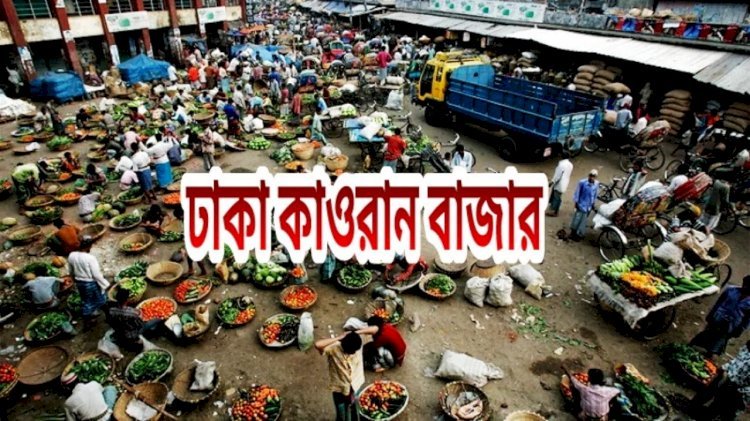
Dhaka Correspondent, 27 February: In Dhaka, Kawran Bazar plays a central role in determining the prices of daily essentials in the capital. From dawn to deep night, hundreds of trucks carrying vegetables, fish, fruits, rice, lentils, and other necessities arrive here from across the country. The wholesale rates set in this market later spread to retail markets, influencing prices across the city. However, according to traders and local sources, this key market is now under the control of a powerful extortion syndicate; large sums of money are collected every day, and the burden ultimately falls on consumers.
Traders claim that nearly 5 million taka is collected daily from wholesalers, transport workers, shopkeepers, and hawkers. At every stage of business—truck entry, unloading goods, placing them in warehouses, loading onto retailers’ vehicles, even taking products out of the market—there is a separate “rate.” In the words of one trader, “Even if you use one inch of space, you have to pay.”
These additional costs are later added to product prices. As a result, even when supply remains normal, inflation cannot be controlled. On paper, prices are one thing; in reality, the costs are another, say those concerned.
Investigations reveal that the entire market has been divided into 10 to 12 zones, with money collected every night. Footpaths, truck stands, CNG and microbus stands, fish depots—everywhere there are fixed daily or monthly extortion rates.
Several tens of thousands of taka are collected daily from CNG stands.
A fixed fee is charged per vehicle at microbus stands.
Monthly collections are made from multiple warehouses on a per-room basis.
In the fish market, separate payments are taken at every stage—workers, ice supply, loading, and unloading.
Traders allege that hundreds of thousands of taka are collected each month from the fish market alone.
After 5 August 2024, clashes broke out several times between two factions of the BNP over control of the market; former leader Azizur Rahman Mosabbir (Musabbir) was shot dead, and several others were injured. Intelligence agencies later moved to identify the network. But traders on the ground say, “Faces have changed, the method has not.”
‘Everyone gets a share,’ allege traders
There are allegations that influential political leaders and activists, local power brokers, and some dishonest members of law enforcement regularly receive a “share.” Even a prominent journalist has been accused of providing “shelter” to the syndicate, protecting it from police and investigative reporters. As a result, complaints bring no remedy. One warehouse owner, speaking anonymously, said, “If you don’t pay, you can’t do business—harassment begins instead.”
Senior police officials have acknowledged that extortion at Kawran Bazar is an old problem. Due to political influence, effective action is often difficult. However, they say that with strong political will, the market could be freed from extortion within a short time.
If the ‘heart’ of the capital’s essential goods market remains under the grip of an invisible tax, controlling commodity prices will remain a paper promise. Unless the syndicate at Kawran Bazar is dismantled, consumers will continue to pay the price, believe traders and analysts. The question now is whether the government can truly break this ‘kingdom’ and return the market to ordinary people.