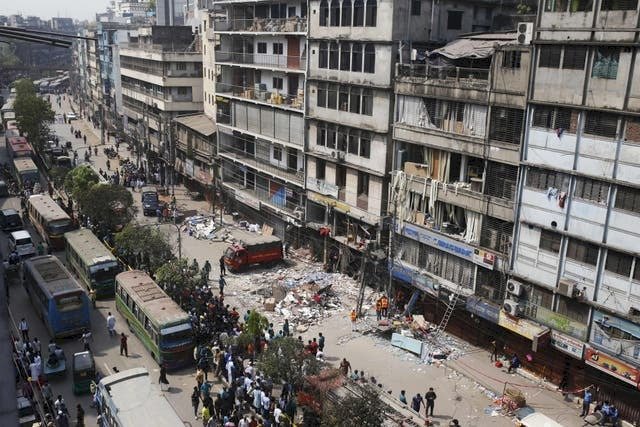
Staff Reporter, 28 February 2026: Bangladesh, Kolkata, and the surrounding regions have been shaken by consecutive days of earthquakes. Panic among the public intensified after the latest quake of 5.3 magnitude struck on Friday afternoon. Before this, tremors of 5.1 and 3.7 magnitude were felt on Wednesday and Thursday, respectively. Throughout February, at least 11 separate quakes were recorded across the country, including the capital. Over the past 27 days, the entire country has experienced 11 earthquakes. These frequent tremors are raising unprecedented concern among citizens—could this be a precursor to a major catastrophe?
The European-Mediterranean Seismological Centre (EMSC) and the United States Geological Survey (USGS) reported that Friday’s earthquake measured 5.3 on the Richter scale, originating in the Satkhira region at a depth of approximately 29 kilometers below the surface. The tremor, felt at 1:52 PM, lasted only a few seconds but was perceptible across various districts, including Dhaka.
The Earthquake Monitoring Centre of the Bangladesh Meteorological Department stated that most of the recent tremors were mild to moderate. However, experts warn that frequent small and moderate earthquakes may indicate the gradual release of energy accumulated within the Earth’s crust. If large amounts of energy are not released over time, there is a risk of a stronger, potentially catastrophic earthquake.
Geologists remind us that Bangladesh lies near the junction of the Indian and Eurasian tectonic plates, making the region historically earthquake-prone. Memories of last year’s 5.7-magnitude quake, which caused deaths and injured hundreds, remain vivid. The most vulnerable areas include Sylhet and Chittagong divisions.
According to experts, earthquakes below magnitude 7 are generally considered moderate, but in densely populated and poorly planned urban areas, even moderate quakes can cause severe damage. Many buildings in the capital are reportedly still not fully earthquake-resistant. Several experts warn that more powerful earthquakes, potentially of magnitude 8 to 9, could occur. The soil across Dhaka and other parts of the country is extremely soft, with clay layers 5–25 miles below the surface. Decades of unplanned urbanization have made large areas susceptible to liquefaction in such quakes, meaning buildings could sink or collapse entirely. Entire districts, including parts of Dhaka, could potentially disappear from maps permanently.
Yet, scientists stress that panic is not the solution—preparedness is. They call for the installation of modern seismographs, ongoing research, strict enforcement of building codes, and increased public awareness.
The persistent tremors raise a crucial question—are these isolated natural events, or do they signal a looming disaster? While there is no definitive answer, experts are issuing a clear warning: there is no time for neglect. Bangladesh must move from a state of waiting for a mega-disaster to one of active preparedness—this is the urgent call of the hour.