Echoes of a Troubled Time ।। Episode: 74 ।। How Weapons Are Flowing into Bangladesh: Are We Heading Toward an Armed Election?

Echoes of a Troubled Time
কলিকালের কলধ্বনি
।। Episode: 74 ।।
।। Siddiquer Rahman Nirjhor ।।
How Weapons Are Flowing into Bangladesh: Are We Heading Toward an Armed Election?
This column is dedicated to all honest Bangladeshis
who chose integrity over temptation,
even when corruption stood wide open before them.
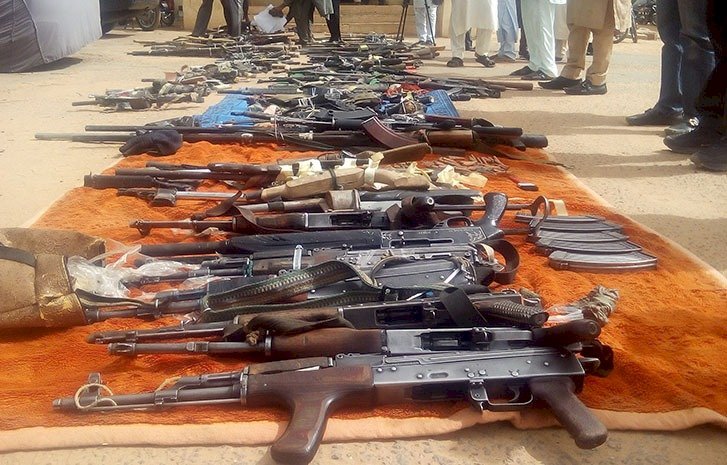
Bangladesh’s national election is now only three days away. Yet the unease hanging in the air has little to do with political heat—it is the scent of weapons. The speed at which firearms are entering from across the border, and the sheer number of weapons still missing inside the country, have turned a once‑hypothetical fear into a chillingly real question: Are we moving toward an armed election?
This is not an exaggeration. It is a stark reflection of reality. The information that has surfaced over the past few months is not the story of a petty criminal network—it is a direct assault on state security, on citizens’ lives, and on the democratic process itself. Leading newspapers in Bangladesh have reported that illegal weapons are entering through at least thirty border points, and they have listed the exact districts and upazilas where these routes lie. Gaps in barbed‑wire fencing, river channels, fishing trawlers, small boats—everything is being used. And the weapons entering the country are not ending up in the hands of petty thieves; they are flowing straight to political enforcers, militant groups, land grabbers, and extortion rings. These are the very weapons that become tools of intimidation, domination, vote-grabbing, and murder during elections.
Layered on top of this is another dark reality within the country. During the July 2024 uprising, 5,847 firearms were looted from police stations and prisons. Of these, 1,362 weapons remain missing. Where are they? Who holds them? For what purpose are they being used? The state has no clear answers. Yet with the election approaching, these missing weapons have become the most unpredictable and terrifying threat. This is not merely a law‑and‑order issue—it is a national security crisis.
The government insists that surveillance has been increased. BGB patrols, police checkpoints, joint‑force raids—everything is underway. But the truth is more unsettling. The major arms dealers, border brokers, and political masterminds behind the violence remain largely untouched. Thousands of people are being arrested, yet the real architects of the weapons network remain invisible. It is a strange and troubling reality: those who carry the weapons are caught; those who command them stay unseen. Just days ago, eleven foreign-made weapons were seized in a raid in Dhaka’s Badda area—proof that the flow of arms has not slowed.
Soon after the election schedule was announced, Osman Bin Hadi was shot and later died. His death triggered attacks on media houses, cultural institutions, and political offices. Police have confirmed that the weapons used in these incidents were foreign-made. In other words, the guns entering through the border are already being deployed in political violence. How, then, can an ordinary voter walk to a polling booth with confidence? How safe are candidates or their polling agents?
So, the question arises: will this election be an armed one? Many are quietly asking it now. And it is no longer a theoretical fear—it is a brutally plausible scenario. If the flow of weapons across the border is not stopped, if the missing weapons are not recovered, if the major arms networks are not dismantled, if the machinery of political violence is not broken—then yes, the election will take place, but under the shadow of arms. And under such a shadow, no election can truly be free or fair.
The state still has time—though very little. Creating a special security belt along the border, forming a dedicated task force to recover missing weapons, ensuring visible neutral security forces in electoral areas—these are no longer optional; they are essential. But above all, what is needed is political will. Free elections are not secured by force alone—they are secured by trust. And once trust is broken, even the strongest security measures cannot restore confidence.
February 12 is not just an election day—it is a test of the state’s capacity. Can the state ensure that its citizens vote safely? Or are we walking into yet another chapter of violence? The question now rests squarely with the state.
Writer: Editor, Columnist, Analyst, Former College Professor
London, 8 February 2026