ভয়েস অব পিপল ।। জনগণের কণ্ঠস্বর, বাস্তবতার প্রতিচ্ছবি
“Nirjhor’s Crisp Short Stories” ।। 2 ।। Rupa’s Silvery Dream

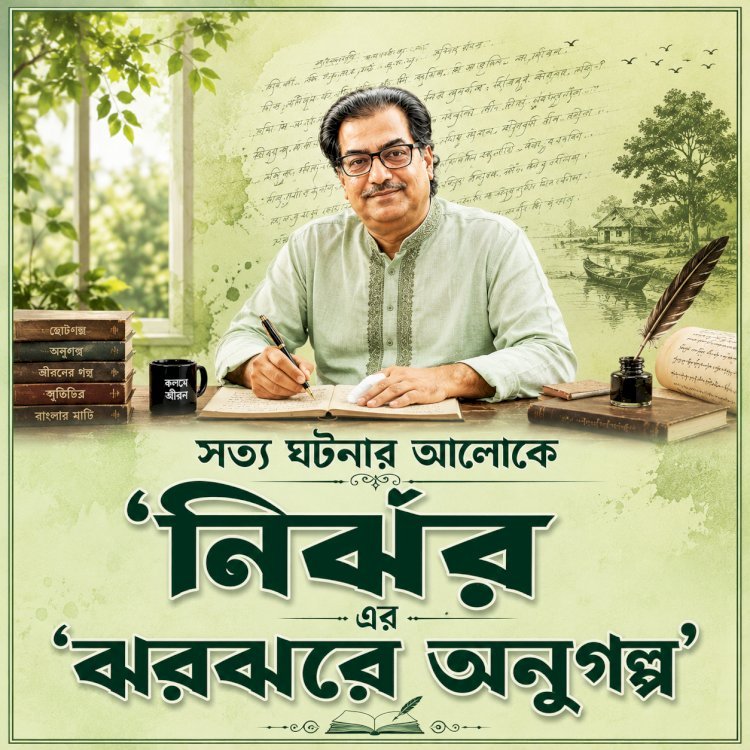
The characters and events in these stories are inspired by people and experiences found in everyday life. Therefore, any resemblance to real persons, places, or situations is entirely natural. Most stories are set in Bangladesh, while others take place in Britain, Germany, or different parts of the world. Yet each story carries its own unique flavour and perspective. Every narrative reflects the joys and sorrows, hopes and disappointments, struggles and triumphs of human life. More importantly, each story contains a message that encourages readers to think, reflect, and discover deeper meanings beyond the words. It is my sincere hope that readers will enjoy these stories and share them with others. If these stories touch hearts, inspire thoughts, or spark meaningful conversations, then the time and effort invested in writing them will have been truly worthwhile.
Rupa’s Silvery Dream
By: Siddiquer Rahman Nirjhor
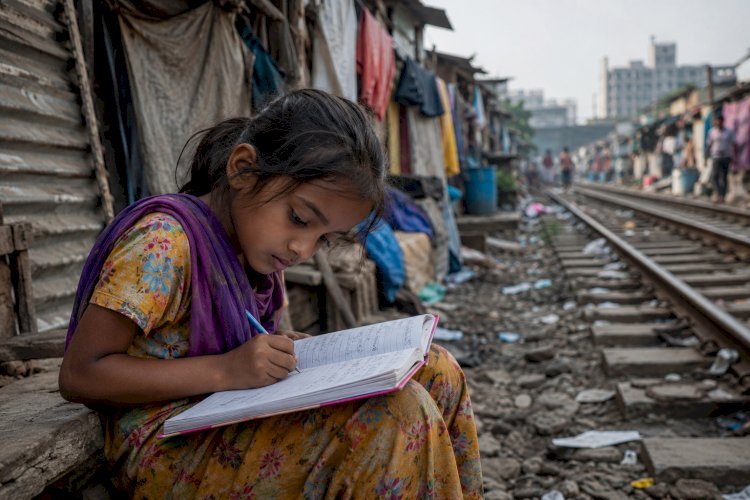
In the polluted air of Dhaka, the afternoon light slowly fades. Once again, Dhaka holds its title as the most polluted city in the world. Today, the heat is also unbearable. In the slum beside the railway line of Shahjahanpur Kacha Bazar, smoke from cooking stoves begins to rise.
Rupa is sitting by the door. She is struggling to breathe. In her hands is an old notebook. She keeps opening it, closing it and opening it again.
On the first page of the notebook, it is written:
“My name is Rupa.”
These four words are her favourite.
Because she can read these four words herself.
Her mother walks past and asks,
— What are you doing?
— Nothing.
— Will looking at a notebook fill your stomach? I still have to go work at Mansur’s house…
Rupa gives her mother a faint smile.
Her mother does not smile back.
There is always a kind of exhaustion in her mother’s eyes.
Cleaning houses in the morning. Another house in the afternoon. Then her own home at night.
Where is there time—or even the mind—to smile?
Rupa used to go to an NGO school. A small school. Colourful pictures on the walls. A tin shed. A tin roof. When rain fell on the tin roof, Rupa would feel an indescribable joy. At times, she would mischievously recite rhymes:
“Rain on the tin roof,
All eyes turn there for proof,
It will bring us nourishment,
Or we won’t be content.”
Sometimes she would say:
“Crows on the tin roof,
We are all going to Mawa.”
It should be said that Rupa always amazed her classmates and even her teachers by spontaneously creating rhymes like this. She loved speaking in rhymes all the time. Hearing her “crows on the tin roof / we are all going to Mawa,” her teachers were deeply impressed. They collected donations and took all the students on a picnic to a beautiful location near the Mawa ferry ghat.
Rupa is remembering those days now. A few drops of tears seem to tremble at the corners of her eyes.
In school, her teacher used to ask,
— What will you become when you grow up?
Everyone gave different answers.
Some said, " Doctor.
Some said police officer.
Some said teacher.
Rupa used to say,
— I will write books.
Everyone would laugh.
But her teacher would not.
She would say,
— If you can write books, you can change many lives.
That school still exists.
But Rupa no longer goes there.
She has to look after her younger brother.
Sometimes she washes dishes in nearby houses. And when her mother suddenly falls ill, she even takes her mother’s place as a domestic worker. This brings in some money. The money is needed for the family.
In the afternoon, when school ends, a group of boys and girls walk down the road.
They have bags on their shoulders.
Books in their hands.
Rupa watches silently.
A girl’s notebook falls on the ground.
Rupa runs and picks it up.
The girl says,
— Thank you.
And then she leaves.
Rupa keeps looking at the notebook for a while.
A new notebook has a different smell.
She likes that smell very much.
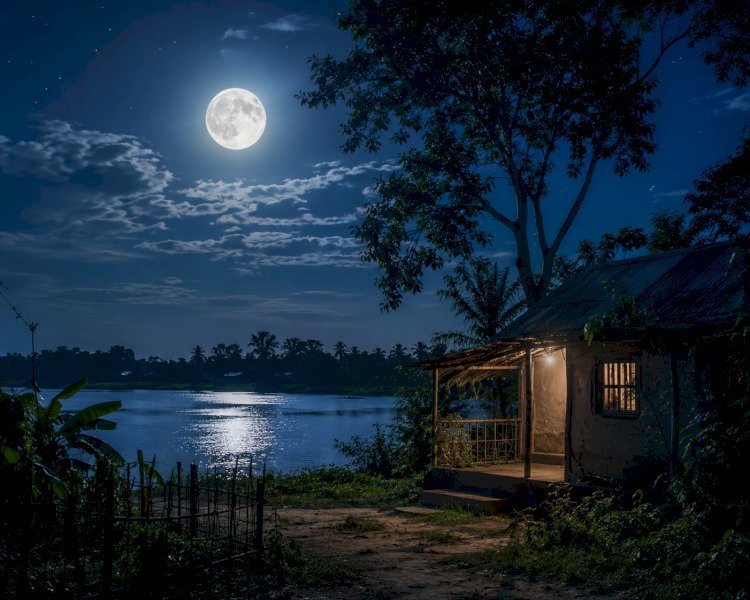
At night, the moon rises in the sky. Moonlight enters the room through the gaps in the tin roof. Rupa opens her notebook and sits down. On the last blank page, she slowly begins to write. Her letters tremble. The lines bend. Still, she writes.
“I will go back to school again.”
After finishing, she keeps staring at the words for a long time.
It feels as if she has written this not on paper, but in the sky.
Just then, her mother calls,
— Rupa, sleep. You have to wake up early.
Rupa closes the notebook.
Moonlight falls on her face.
Her face looks bright.
As if it truly reflects her name—silvery.
Whether Rupa’s silvery dream will one day come true, or whether it will disappear like the moonlight slipping through a tin roof gap—does anyone anywhere have that answer written down?
London, 7 June 2026